
Introduction And Epidemiology
- Varicella-Zoster Virus (VZV) causes chickenpox and can lead to severe complications in the fetus and neonate.
- Varicella infection during pregnancy is uncommon, occurring in about 3 in 1,000 pregnancies.
- Primary transmission occurs through respiratory droplets, contact with vesicular lesions, or transplacental transfer.
Congenital Varicella Syndrome
- Congenital varicella syndrome occurs when maternal infection happens early in pregnancy.
- The risk of congenital syndrome is low, estimated at 0.55% during the first 12 weeks of gestation.
- The risk increases slightly to 1.4% when maternal infection occurs between 13 and 20 weeks of gestation.
- Fetal death or early neonatal demise may occur.
Clinical Features
- Skin scars distributed in a dermatomal pattern.
- Limb hypoplasia.
- Ocular defects such as chorioretinitis.
- Central nervous system (CNS) abnormalities.
- Gastrointestinal abnormalities including atretic bowel.
- Fetal growth restriction (FGR).
Perinatal And Postnatal Varicella
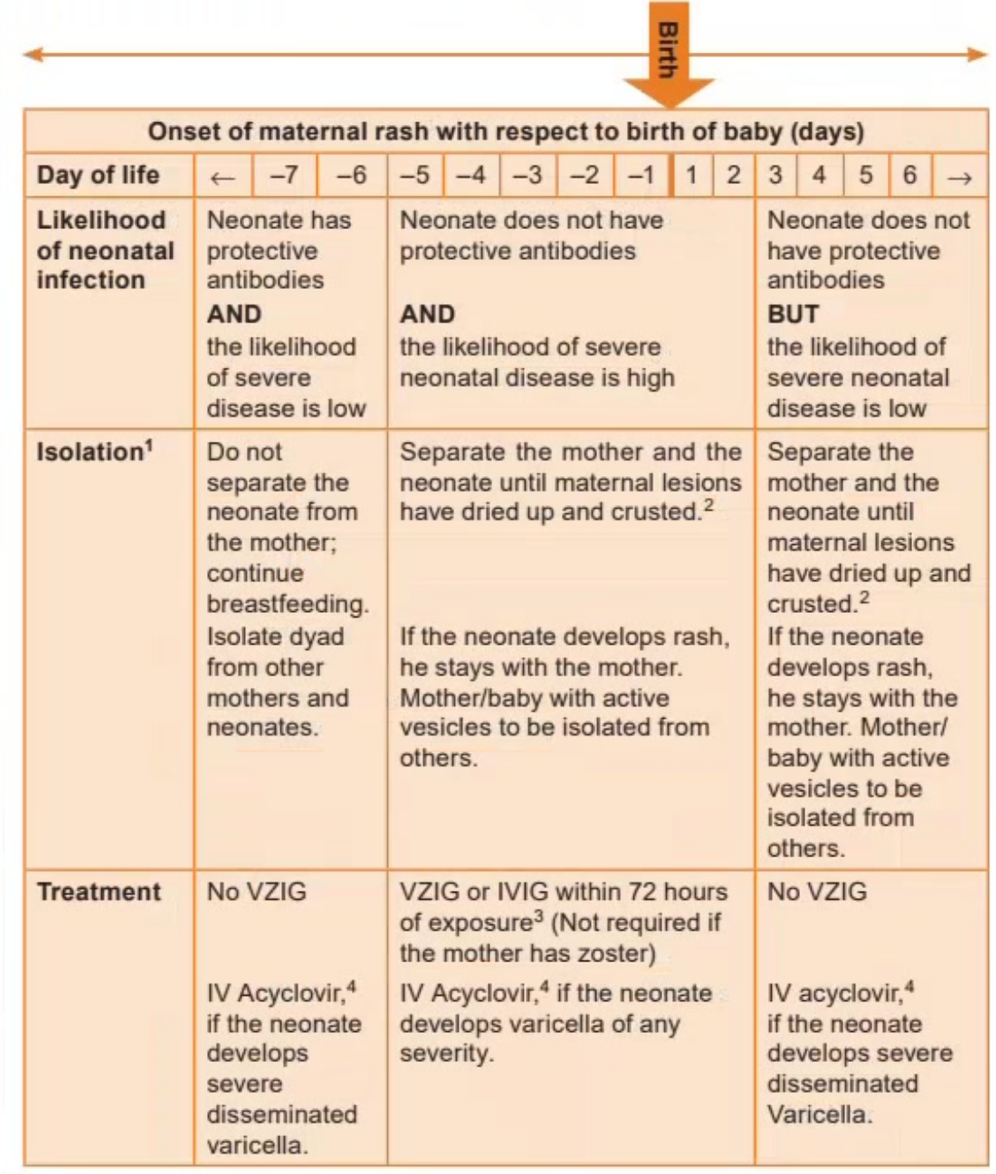
- The greatest risk for severe, life-threatening infant disease occurs when the maternal rash appears between 5 days before and 2 days after delivery.
- This timing provides insufficient time for the fetus to acquire protective transplacental VZV-specific antibodies from the mother.
- Neonatal symptoms typically begin 5 to 10 days after delivery.
- The expected mortality rate in this high-risk window is approximately 30%.
- Severe complications include hemorrhagic pneumonia and necrotizing hepatitis.
- Postnatal varicella acquired from exposure after birth is generally mild if maternal antibodies are present, but it can rarely lead to severe disseminated disease.
Diagnosis
- Diagnosis is primarily clinical, based on a typical vesicular rash and a maternal history of peripartum varicella or postpartum exposure.
- Laboratory confirmation involves detecting the virus from cells at the base of a vesicle.
- Diagnostic modalities include Polymerase Chain Reaction (PCR) and immunofluorescent antibody testing.
Management
Antiviral Therapy
- Infants with congenital infection from early in utero transmission usually lack active viral disease at birth, so antiviral therapy is not indicated.
- Symptomatic infants with severe disease must receive Intravenous (IV) Acyclovir as soon as possible.
- Severe disease includes pneumonia, severe hepatitis, or presentation with more than 50 rashes.
- The recommended dose of IV Acyclovir is 30 mg/kg/day divided into three doses for 7 to 10 days.
- Oral acyclovir is not recommended for symptomatic neonates because of poor enteral absorption in this age group.
Post-Exposure Prophylaxis And Management
- Varicella Zoster Immunoglobulin (VARIZIG) or Intravenous Immunoglobulin (IVIG) provides passive immunity and reduces the risk of severe infection.
- The dose of VARIZIG is 125 IU for infants weighing less than 10 kg, administered intramuscularly.
| Exposure Scenario | Prophylaxis/Treatment | Additional Management |
|---|---|---|
| Maternal rash 5 days before to 2 days after delivery | VARIZIG or IVIG within 48 to 96 hours. | Isolate dyad. Separate mother and neonate until maternal lesions crust. |
| Preterm <28 weeks or <1000 g birth weight | VARIZIG or IVIG within 48 to 96 hours, regardless of maternal history. | Strict infection control and isolation. |
| Asymptomatic newborn exposed to infected person (not mother) | VARIZIG or IVIG within 48 to 96 hours. | Observation for symptoms. |
| Infant <1 month presenting with clinical signs (high-risk setting) | IV Acyclovir for 7 to 10 days, ideally within 24 hours of rash onset. | Assess for severe disseminated disease. |
Isolation And Feeding
- Airborne and contact infection control precautions must be strictly implemented.
- Isolation continues until all lesions have crusted, which usually takes at least 5 days.
- Breastfeeding should be continued because protective antibodies pass through breast milk.
- If the mother and baby are separated due to active maternal lesions, expressed breast milk can be provided unless there are active lesions directly on the breast.